


Fellow Climate Warriors,
We’re back in action again with the 2nd deep dive into our fund’s consumer climate tech investment strategy. But first, ICYMI, we launched the application for the 2nd cohort of our CTC Fund Fellowship. Do you want some hands on climate tech VC experience while helping lay the foundation for CTC Fund II? Say no more and APPLY HERE today!
Also, we launched our very first CTC Marketing Fellowship! Learn more about our marketing fellowship and APPLY HERE while the gettin’s good!
Ok, back to business. Today we wade into the regulatory waters and explore how climate regulatory tailwinds will also benefit consumer climate tech. Big shout out to CTC Fund fellow Isabella Todaro for authoring this section.
If you are an accredited investor and would like to learn more ping us at info@climatetechcircle.com.
Warmly,
CTC
CTC Investment Strategy Deep Dive
Part 2: Regulatory Tailwinds
As promised, we’re diving into the nitty gritty details to explain our belief in consumer climate tech. Last week, we described how consumers are increasingly demanding climate solutions in their everyday lives. Today, we’re breaking down the regulatory developments that are both a result of this consumer pressure and making it possible for consumers to build a high quality, low-carbon, lifestyle.
Regulatory Tailwind #1 | Largely in response to activism, there’s been a crackdown on greenwashing.
Following a wave of consumer demand for climate-friendly products, companies rushed to respond. In CPG, the response was largely driven by what companies could say to their customers. Greenwashing proliferated. Without standardization, companies made climate and carbon claims based on narrow measurements of their emissions and a heavy reliance on carbon credits from the voluntary market, many of which have proven to deliver much less carbon benefit than promised.
In response, just last month, the EU reached a provisional agreement to ban several forms of greenwashing, including vague sustainability claims, product labels that are not third party verified, and unproven durability claims.
In the US, there have been a series of lawsuits directed at companies like Evian and Delta over their carbon neutrality claims. This has led leading consumer brands like KitKat and Gucci to preemptively drop their own climate marketing claims. The FTC is in the process of updating their Green Marketing guides and observers are expecting the agency to tighten the scope for allowable climate and carbon claims on products, bringing US greenwashing regulation closer to the European standard.
This creates an opportunity for consumer climate tech companies that offer direct solutions.
Anti-greenwashing legislation will force consumers who used to select for climate-friendly candy bars, water bottles, and airlines to look for more radical solutions that maintain their standard of living while addressing emissions directly. Candy bar manufacturers will have to take substantive actions to actually decarbonize their products, which will drive demand for inputs like synthetic palm oil from C16 Biosciences. They’ll shop for airlines who actively trap and utilize carbon to power airplanes, like Dimensional Energy.
Regulatory Tailwind #2 | Meaningful carbon emissions regulation is here at the state and local level.
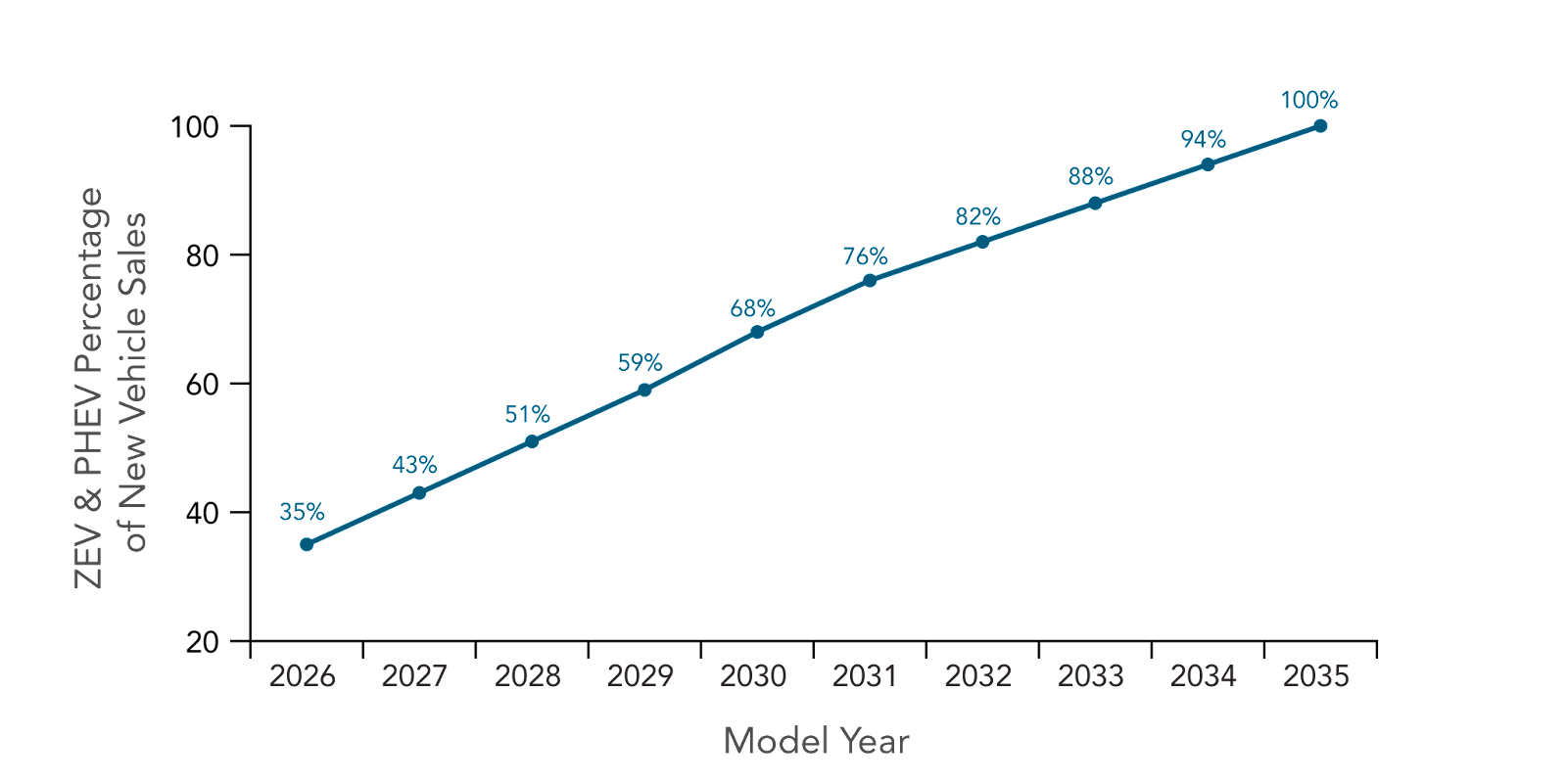
The recently passed California State Climate Corporate Data Accountability Act will require nearly all companies operating in California to measure and disclose their Scope 1-3 emissions and climate risks. Also in California, by 2035, all new vehicles sold must be EVs (see below for projected adoption).
Citation: California Air Resources Board
In New York City, Local Law 97 will have widespread implications (see below for a snapshot of lots covered) for building owners who will soon have to comply with emissions caps and reporting requirements and, at the state level, New York has banned gas burning cooktops in new buildings and is stoking induction cooking innovations to replace gas stoves in old buildings.

Citation: NYC.gov
These are just a few examples of the state regulations requiring consumer climate tech solutions.
California’s EV law will accelerate adoption of charging station technologies for cities like It’s Electric’s platform to empower property owners to install public charging stations. The wave of legislation in New York aimed at residential properties will drive adoption of retrofit solutions like those offered by Channing Street Copper, which makes it much easier to retrofit units for electric cooktop suitability.
Regulatory Tailwind #3 | Governments are subsidizing the growth of climate technologies.
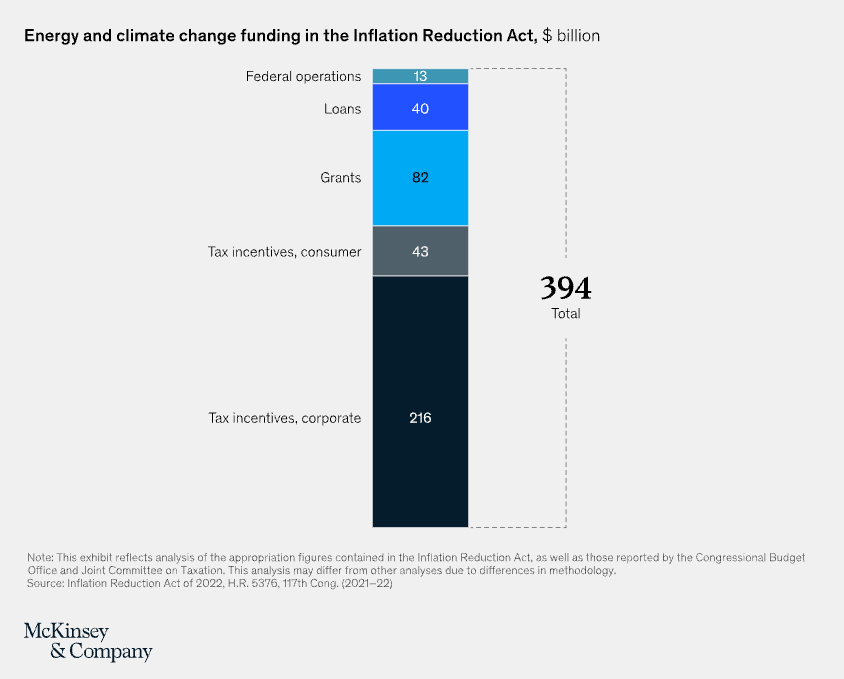
In 2019, the EU passed the European Green Deal to accelerate the region’s transition to net-zero emissions by 2050 and promised €1 trillion in government spending on climate solutions. The US followed along with its own suite of spending packages including the Bipartisan Infrastructure Law, the CHIPS Act, and the Inflation Reduction Act, which will equal nearly $2 trillion in government spending, much of which is directed specifically towards climate solutions.
Both packages offer generous consumer tax credits. The IRA alone offers $43 billion in credits that help to make EVs, rooftop solar, and home energy improvements more competitive (see below for breakdown of total IRA spending).
Citation: McKinsey
Additionally, the IRA also provides incentives for R&D to develop nascent consumer climate technologies. One example is up to $1.75 per gallon tax credits for the development of sustainable aviation fuels.
For consumer climate tech, specifically, all of this government spending is a boon.
For example, the IRA’s basket of incentives for the HVAC industry – including low-cost financing and demand-generating tax credits will make it both easier for companies like Gradient to grow faster and to sell their solutions to homeowners more easily.
Nascent energy and fuel technologies, like those being pioneered by Avalanche and Dimensional will benefit from IRA money too – whether through tax credits or R&D funding.
To sum it up – we believe recent government spending packages, combined with a regulatory crackdown on greenwashing, create a unique opportunity for consumer climate tech companies to enable corporations to directly reduce emissions as opposed to offsetting their way out of the problem. In fact, some consumer climate tech companies will earn market share away from legacy consumer brands, even those who have attempted to make their products more “sustainable”.
Next week, we’ll dive into how legacy corporations are involved in this transition themselves!